What we take responsibility for.
These are not services on a menu. They are the disciplines we practice, and each one is backed by documented work in the project index. When we take on a car, we take responsibility for how these systems behave together.
The difference
We build our own tools.
Most shops buy their capability off the shelf and are limited by what the shelf offers. We develop ours. When the tool we need does not exist, we write it. When a toolchain is stuck in one language, we port it. When a new technology like AI can sharpen the work, we put it on the pit wall before the rest of this industry has finished arguing about it.
That is not recklessness. It is discipline: everything we deploy is validated against physical measurement, labels its own uncertainty, and keeps a human crew in the loop. The result is a small company with capabilities that usually require a factory program.
We design the electrical system as a system: power distribution strategy, CAN network design, sensor selection, and serviceability. Harnesses are built in-house to Mil-Spec or Club Spec standards depending on the program and budget.
Evidence: #501, complete architecture →
Standalone ECU selection, installation, and calibration. We build air-mass and torque models, run steady-state dyno development, and refine drivability until the result meets an OEM standard, not just a peak number.
Evidence: S54 E30, 100+ hour calibration →
CAD in SolidWorks, packaging studies, prototyping, and fabrication. When a component does not exist or does not fit, we engineer it for the vehicle rather than forcing an adaptation.
Evidence: S54 E30, pedal assembly redesign →
Complete-vehicle programs where electronics, powertrain, chassis, and driver interface are developed together. This is the discipline that separates a collection of parts from a finished car.
Evidence: S54 E30, complete vehicle →
Instrumented development at the track. Data acquisition, driver feedback, and measured change. We test one variable at a time and keep the results.
Evidence: #11, endurance development →
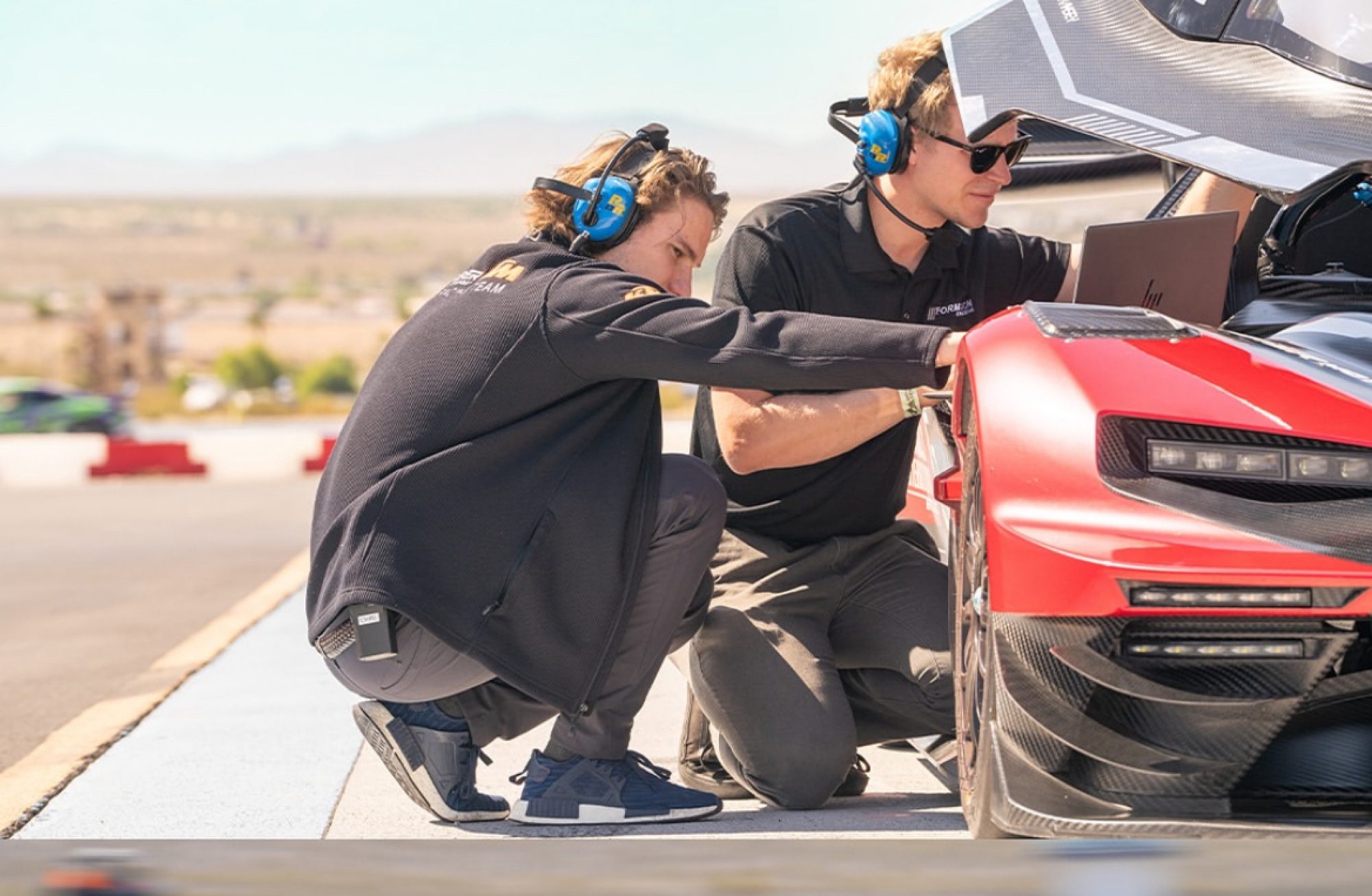
Race preparation and trackside engineering for endurance and sprint competition, from fuel systems to lighting to failure analysis between sessions.
Evidence: #11, NASA WERC program →
We build our own software. Our endurance race strategy model began as in-house MATLAB code, was rebuilt in Python with AI-assisted development, and ran live during competition, computing fuel windows and stint strategy in real time. We put modern tools, including AI, to work anywhere they sharpen the engineering.
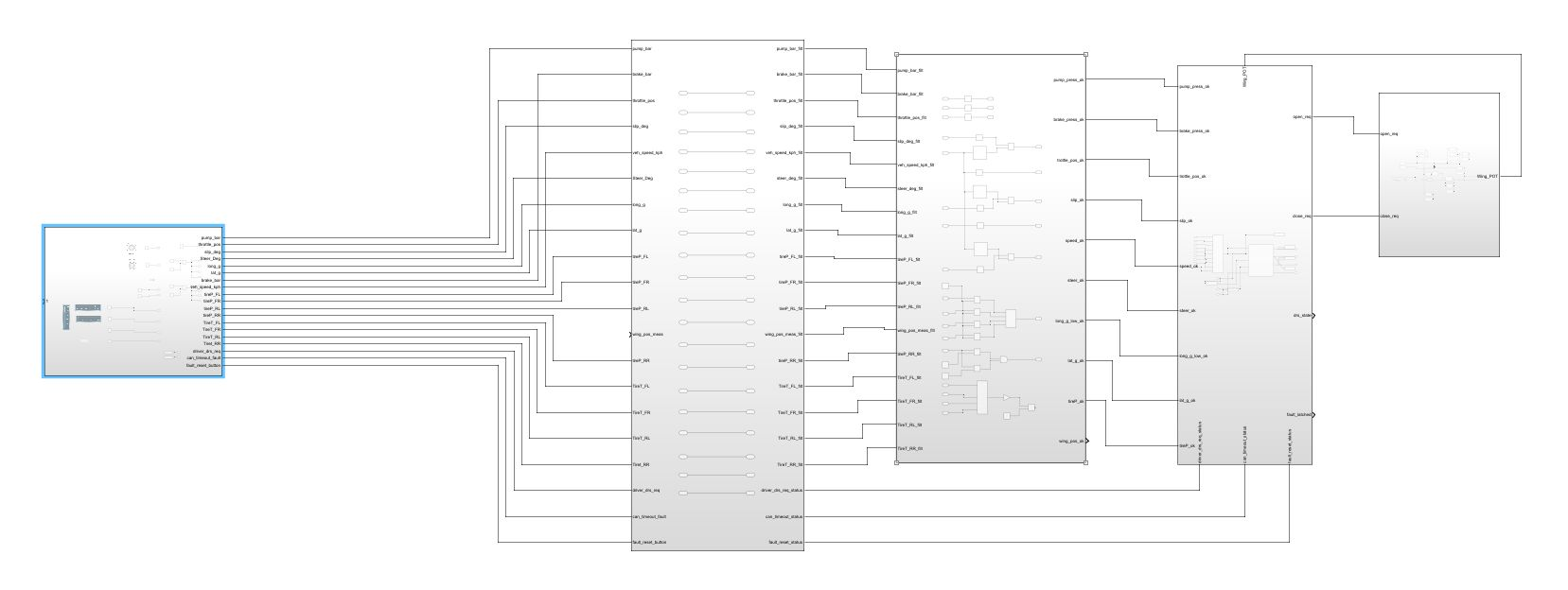
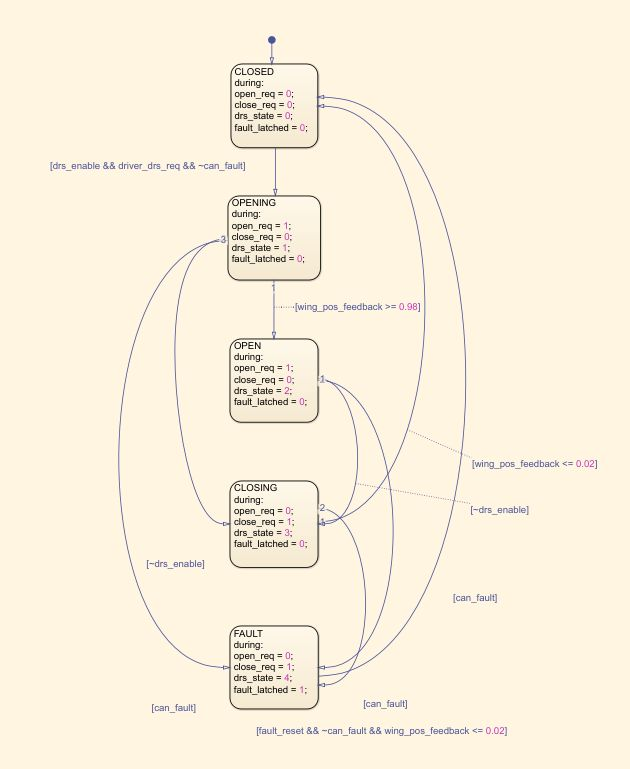
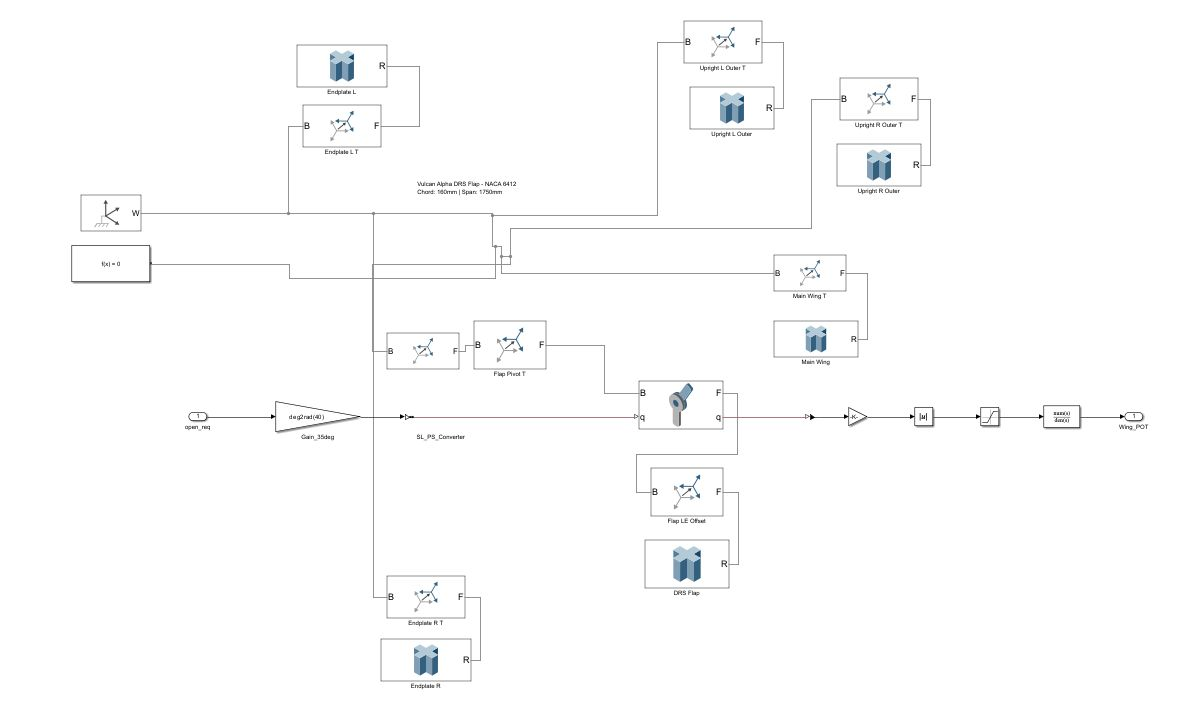
Simulink, Simscape, and Stateflow, applied with OEM methodology: MIL, SIL, PIL, HIL. Our DRS control strategy was designed as a five-state machine, simulated against the SolidWorks wing geometry in a multibody model with aero loads and a revolute joint for the DRS element, and validated with the driver in the loop. Simulation is complete, and the strategy is ready to deploy to MoTeC hardware through the MATLAB-enabled development license.
Evidence: Presented at UNLV · KTM GTX program
Driver development coaching and arrive-and-drive rental remain available alongside the engineering programs. Ask us.
Inquiries
Tell us what the car needs to do. We will tell you what it takes.

